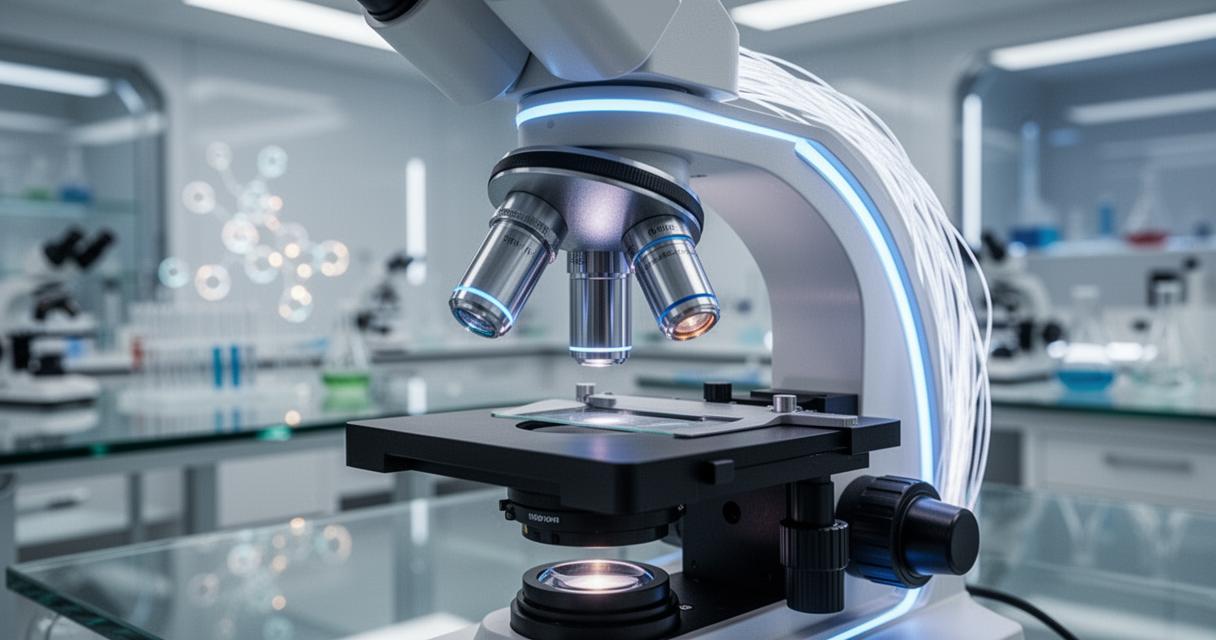
Biological research has experienced extraordinary transformation through the development of advanced optical methods, with epifluorescence microscopy standing at the forefront of this scientific renaissance. This technique has enabled researchers to peer into the microscopic world with unprecedented clarity, illuminating cellular structures and molecular interactions that were once hidden from view. By harnessing the power of fluorescent markers and precisely tuned light sources, scientists can now visualise proteins, track cellular pathways, and unravel complex biological mechanisms in ways that fundamentally reshape our understanding of life at the molecular level.
Understanding epifluorescence microscopy: principles and technical foundations
The Core Mechanism of Fluorescence Excitation and Emission
The fundamental principle underlying epifluorescence microscopy revolves around the remarkable phenomenon of fluorescence itself. When specific molecules called fluorophores absorb light energy at one wavelength, they become electronically excited and subsequently release energy in the form of light at a longer wavelength. This emitted light carries critical information about the location and concentration of labelled structures within biological samples. The term epifluorescence refers specifically to the configuration where excitation light reaches the specimen through the same objective lens that collects the emitted fluorescence, creating an elegant and efficient optical pathway. This arrangement maximises signal collection while minimising optical complexity, making the technique both powerful and accessible for a wide range of applications.
The process begins when high-intensity light from an excitation source passes through a series of optical filters designed to isolate specific wavelengths. These carefully selected wavelengths correspond to the absorption spectra of fluorophores that have been introduced into the biological sample, either through chemical staining or genetic modification. As the excitation light strikes fluorescently labelled molecules within the specimen, they absorb this energy and almost instantaneously emit photons at a shifted wavelength. The emitted light then travels back through the objective lens, where it is separated from reflected excitation light by a specialised dichroic mirror, allowing only the fluorescent signal to reach the detector or eyepiece. This elegant separation of excitation and emission wavelengths forms the cornerstone of epifluorescence imaging, enabling researchers to distinguish fluorescent structures from background noise with exceptional clarity.
Essential components: objective lenses, dichroic mirrors, and excitation sources
The objective lens represents perhaps the most critical component in any epifluorescence microscopy system, serving the dual function of focusing excitation light onto the specimen and collecting emitted fluorescence with maximum efficiency. Modern objective lenses designed for fluorescence work are engineered with specialised optical coatings that minimise light loss and maximise transmission across specific wavelength ranges. High numerical aperture objectives are particularly valued in fluorescence applications because they gather more light from the specimen, directly improving image brightness and resolution. The quality of the objective lens ultimately determines the finest details that can be resolved in fluorescent images, making investment in superior optics essential for cutting-edge research.
Dichroic mirrors form another indispensable element within the optical train, functioning as sophisticated beam splitters that reflect light below a certain wavelength whilst transmitting light above that threshold. These precisely manufactured optical components are positioned at a forty-five-degree angle in the light path, allowing excitation light to be directed toward the specimen whilst permitting emitted fluorescence to pass through to the detection system. The careful selection of dichroic mirror characteristics must align with the specific fluorophores being used, ensuring optimal separation of excitation and emission wavelengths. Excitation sources have evolved dramatically over recent decades, progressing from traditional mercury and xenon arc lamps to modern light-emitting diodes and laser systems. Contemporary LED-based illumination systems offer numerous advantages including longer operational lifetimes, lower heat generation, rapid switching between wavelengths, and precise intensity control. These technological advances have made epifluorescence microscopy more reliable, versatile, and accessible to researchers across diverse biological disciplines.
Wavelength Selection and Molecular Visualisation in Biological Systems
Matching Wavelengths to Fluorophores: Optimising Detection of Cellular Structures
The selection of appropriate wavelengths represents a crucial decision point in designing epifluorescence experiments, as each fluorescent probe possesses unique excitation and emission characteristics. Common fluorophores used in biological research span the visible spectrum, from ultraviolet-excited blue emitters through to far-red fluorescent proteins that can penetrate deeper into tissue samples. Green fluorescent protein and its numerous derivatives have revolutionised cell biology by allowing researchers to genetically encode fluorescent tags directly into the proteins of interest, eliminating the need for chemical staining whilst preserving cellular function. Matching the excitation source wavelength to the absorption maximum of the chosen fluorophore ensures maximum signal generation, whilst selecting emission filters that capture the peak fluorescence output optimises detection sensitivity.
Beyond simply achieving bright images, thoughtful wavelength selection enables researchers to target specific cellular structures with extraordinary precision. Nuclear stains such as DAPI absorb ultraviolet light and emit in the blue region of the spectrum, providing clear visualisation of chromosomal DNA and nuclear organisation. Membrane-targeted fluorophores can reveal the intricate architecture of cellular boundaries and organelles, whilst specialised probes can detect calcium ions, reactive oxygen species, or pH changes within living cells. The ability to assign distinct wavelengths to different molecular targets transforms the microscope into a powerful analytical instrument capable of simultaneously monitoring multiple biological processes. This wavelength-specific approach to molecular visualisation has become indispensable in modern neuroscience, where researchers track neurotransmitter release, monitor neuronal activity, and map synaptic connections with fluorescent indicators specifically designed for these applications.
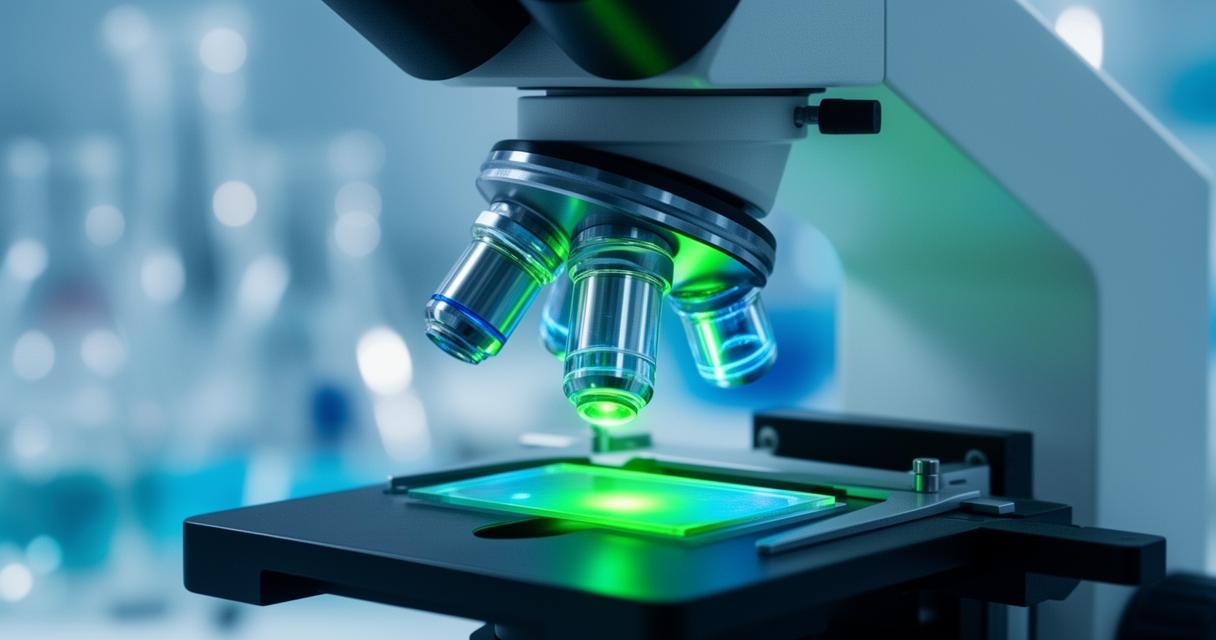
Multi-Colour Imaging: Simultaneous Observation of Different Proteins and Molecules
One of the most transformative capabilities enabled by epifluorescence microscopy is the simultaneous detection of multiple fluorescent labels within a single specimen, a technique known as multi-colour or multiplexed imaging. By carefully selecting fluorophores with distinct excitation and emission spectra, researchers can label different proteins, organelles, or molecular structures with different colours, then visualise their spatial relationships and interactions within the same field of view. This approach has proven invaluable for understanding cellular organisation, protein colocalisation, and the dynamic interplay between different molecular components during biological processes. The key to successful multi-colour imaging lies in choosing fluorophore combinations with minimal spectral overlap, ensuring that emission from one probe does not contaminate the detection channel intended for another.
Modern epifluorescence systems equipped with multi-band filter sets and rapid wavelength switching capabilities can capture images in three, four, or even more distinct colour channels within seconds. This speed is particularly important when imaging living cells, where biological processes unfold on timescales ranging from milliseconds to hours. Sequential acquisition of different wavelength channels, combined with sophisticated image processing software, allows researchers to generate composite images that reveal the complex spatial organisation of cellular components. In neuroscience research, multi-colour imaging has enabled breakthrough discoveries about synaptic structure, neuronal connectivity, and the subcellular localisation of signalling molecules. Researchers can simultaneously visualise presynaptic and postsynaptic markers to understand synaptic development, or combine structural labels with functional indicators to correlate neuronal morphology with electrical activity. These capabilities have opened new windows into the organisation and function of neural circuits, driving forward our understanding of brain function in both health and disease.
Epifluorescence versus confocal microscopy: resolution, depth, and application
Image resolution and optical sectioning capabilities compared
Whilst epifluorescence microscopy has revolutionised biological imaging, it operates alongside complementary techniques such as confocal microscopy, each with distinct advantages for particular applications. Traditional epifluorescence systems illuminate the entire specimen volume within the depth of field, collecting fluorescence from both in-focus and out-of-focus regions simultaneously. This approach maximises light collection efficiency and enables rapid imaging, making it ideal for detecting faint signals and observing fast dynamic processes in relatively thin specimens. However, the inclusion of out-of-focus light can reduce image contrast and obscure fine structural details, particularly in thick samples where fluorescence from multiple planes contributes to the final image.
Confocal microscopy addresses these limitations through the implementation of optical sectioning, using a spatial pinhole to reject out-of-focus light and collect fluorescence only from a thin optical plane within the specimen. By scanning this focused point across the sample and building up an image pixel by pixel, confocal systems generate images with superior resolution in both the lateral and axial dimensions. This capability proves especially valuable when examining thick tissue sections or three-dimensional cellular structures, where the ability to optically section through different depths reveals architectural details that would otherwise remain hidden. The enhanced resolution comes at a cost, however, as point-scanning confocal imaging typically requires longer acquisition times and exposes specimens to higher cumulative light doses, potentially causing phototoxicity or photobleaching in living samples. The scanning process also discards a significant portion of emitted fluorescence that does not pass through the confocal pinhole, reducing overall light collection efficiency compared to widefield epifluorescence approaches.
Selecting the Appropriate Technique for Specific Biological Research Questions
The choice between epifluorescence and confocal microscopy ultimately depends on the specific demands of the research question being addressed, with each technique offering particular strengths for different experimental scenarios. Epifluorescence microscopy excels in applications requiring maximum sensitivity to detect weak fluorescent signals, rapid acquisition to capture fast biological events, or extended time-lapse imaging where minimising photodamage is paramount. Studies involving cultured cells grown in thin monolayers, tracking of fluorescent molecules in real-time, or screening large numbers of samples benefit enormously from the speed and efficiency of epifluorescence systems. The technique has become indispensable in neuroscience for calcium imaging experiments that monitor neuronal activity across populations of cells, where the ability to simultaneously observe many neurons with high temporal resolution provides critical insights into network dynamics and information processing.
Confocal microscopy, by contrast, represents the preferred choice when three-dimensional structural information is essential, when working with thick tissue sections, or when the highest possible resolution is required to resolve closely spaced structures. The optical sectioning capability enables researchers to reconstruct detailed three-dimensional models of cells and tissues, revealing organisational principles that cannot be appreciated in two-dimensional projections. In neuroscience, confocal imaging has been instrumental in mapping dendritic spine distributions, characterising synaptic architecture, and analysing the complex morphology of different neuronal cell types. Recent technological advances have begun to blur the boundaries between these techniques, with structured illumination and computational approaches bringing optical sectioning capabilities to widefield epifluorescence platforms, whilst spinning disk confocal systems offer improved speed and reduced photobleaching compared to traditional point-scanning designs. As microscopy technology continues to evolve, the integration of epifluorescence principles with novel optical designs promises to deliver ever more powerful tools for visualising the molecular machinery of life, driving discoveries that will shape the future of biological and medical research.